

Digital transformation is no longer a technology initiative—it's the operating model that defines how organizations compete, serve customers, manage risk, and scale productivity. Yet the gap between investment and results remains stark: global digital transformation spending is projected to reach $3.4 trillion by 2026, while less than 30% of transformations succeed. Leaders face mounting pressure to prove AI value quickly—enterprise AI funding continues to rise, but only a small fraction of organizations report significant financial benefit from AI initiatives.
OptimEdge exists to close this gap. We bring strategy and execution into one accountable team, with an AI-first approach grounded in data, security, and measurable outcomes. We partner with mid-market and enterprise organizations to modernize platforms, redesign operations, and deliver business results—faster, more transparently, and with less organizational friction.

1) The Modernization Mandate: Why "Keeping Up" Is Now a Risk Position
Modernization has shifted from technical debt cleanup to an enterprise risk and growth imperative. Demand is being pulled by AI, cloud economics, cyber threats, and customer expectations—all at once. CIO priorities increasingly converge on security, AI value, and data governance as the foundations for next-generation operations. Cloud has become the default substrate: 94% of organizations use cloud infrastructure, with hybrid and multi-cloud common. Cloud spending is projected to reach $723.4B by 2025, amplifying board scrutiny on unit economics, cost controls, and ROI.
The pain points are familiar—and compounding:
- Legacy cores that slow change. ERP/CRM/HCM upgrades and brittle integrations lock organizations into long release cycles and expensive customization.
- Siloed operations that block end-to-end value. Enterprise AI research highlights persistent friction between business and technical stakeholders—misalignment that turns use cases into stalled pilots.
- Talent scarcity and delivery bottlenecks. Data and IT talent shortages are expected to intensify, with some projections indicating severe gaps by 2026.
- Security and compliance pressure—now AI-accelerated. CIO surveys continue to elevate cyber risk as a top, recurring priority as threats evolve and automation increases adversary speed.
Here's what this looks like in real environments:
- A manufacturer running an aging ERP struggles to instrument shop-floor data for predictive maintenance because key events are trapped in custom tables and point-to-point integrations.
- A healthcare services firm adopts generative AI for support agents, but inconsistent knowledge articles and weak governance create compliance and quality risks.
- A financial services organization migrates workloads to cloud, only to find spend increasing due to unoptimized architectures and unmanaged environments.
Next steps for leaders:
- Treat modernization as a portfolio, not a project. Tie each initiative to a measurable business hypothesis—cycle time, cost-to-serve, risk reduction—and manage tradeoffs explicitly.
- Sequence "data + security" ahead of "AI scale." AI value depends on governed data and controlled access; accelerate both early to avoid rework later.
2) Why Integrated Consulting + Engineering Wins: Closing the Strategy-to-Execution Gap
Many transformations fail not because leaders lack vision, but because they can't consistently translate strategy into shipped capability. Analysts have repeatedly highlighted an execution gap: incremental integrations and fragmented programs often fail to demonstrate tangible business value without a cohesive platform and delivery model. This is one reason success rates remain low.
OptimEdge's model eliminates "handoff loss"—the time, cost, and misunderstanding created when strategy firms design plans and separate delivery teams implement them. We operate as a single, integrated team spanning transformation strategy, operating model design, architecture, product management, software and data engineering, cloud/DevSecOps, and change enablement. That integrated structure aligns with what high-performing organizations adopt internally: a product operating model and multidisciplinary execution.
Research-based indicators reinforce why this approach works:
- McKinsey-cited analysis associates mature product and operating models with higher returns and operating margins.
- IDC notes that agile value management can drive 35–65% reductions in spending or time-to-market, while emphasizing the widespread lack of visibility into delivery performance—reported by 96% of CIOs.

Here's what integrated delivery looks like in practice:
- Modernization with business architecture built in: Rather than replatforming "as-is," we map revenue and cost drivers to domain services and data products so engineering work aligns directly to business outcomes.
- Program delivery with product discipline: Roadmaps are managed as product portfolios with explicit value metrics, not as collections of IT projects.
- Security and compliance embedded in engineering: DevSecOps guardrails, policy-as-code, and audit-ready traceability reduce risk without slowing teams.
Next steps for leaders:
- Demand one accountable owner for outcomes. A single partner responsible for both business case and build reduces blame shifting and accelerates decisions.
- Standardize on a "value backlog." Prioritize work by measurable impact—order cycle time, cost per ticket, quote accuracy—not by stakeholder volume.
3) AI-First Solutions in Practice: From Pilots to Production Value
Enterprise leaders increasingly agree AI is transformative—74% of CEOs view AI as transformative. At the same time, reality is sobering: only a small minority of organizations achieve significant financial benefit from AI. The gap is rarely the model; it's the system around the model—data readiness, workflow integration, security, and adoption.
OptimEdge's AI-first approach focuses on production outcomes, not experimentation theater. We design AI into operating processes, build the data and governance foundations, and engineer platforms that can scale responsibly.
Tangible AI use cases we implement—with the constraints leaders care about:
- Service operations copilots: GenAI-assisted agent workflows that draft responses, summarize cases, and surface knowledge—while enforcing policy controls and citation requirements for regulated contexts. This directly targets productivity and customer experience, aligning with workforce productivity priorities reported in executive surveys.
- Intelligent document and claims processing: Extracting structured data from semi-structured documents—contracts, invoices, clinical forms—routing exceptions, and using human-in-the-loop review for accuracy and compliance.
- Predictive operations and maintenance: Combining IoT/telemetry and historical work orders to reduce downtime and optimize parts inventory—especially valuable in industrial and asset-heavy sectors where operating efficiency is core to competitiveness.

We also address the "hard parts" that stall scale:
- Data quality and governance: Repeatedly flagged as transformation-critical in CIO priorities.
- Security threat evolution: Cyber remains a top priority, increasingly shaped by AI-enabled attack techniques.
- Operating model change: AI must be embedded into roles, controls, and incentives—not bolted onto dashboards.
Next steps for leaders:
- Start with workflow ROI, not model benchmarks. Measure impact where the work happens: handling time, rework rate, throughput, and cost-to-serve.
- Build an AI control plane early. Define access, logging, evaluation, and content safety policies as reusable services—so every use case doesn't reinvent governance.
4) Global Delivery, Local Accountability: Speed Without Losing Control
Enterprises want the velocity of global delivery and the confidence of local accountability. Yet traditional outsourcing often fragments ownership and creates slow feedback loops—particularly when strategy, architecture, and build are split across multiple vendors. OptimEdge's delivery model provides global scale with a single accountable team.
Here's how it works:
- Onshore leadership and outcome ownership: Senior consulting and engineering leaders remain directly accountable for business results, stakeholder alignment, and risk.
- Global engineering capacity with standardized ways of working: Consistent DevSecOps pipelines, coding standards, reference architectures, and shared quality gates reduce variation and improve predictability.
- Product-centric operating rhythm: Cross-functional teams work in increments, shipping usable capability continuously—supported by metrics and transparency that address the visibility gaps IDC highlights in software delivery.
Why this matters now:
- Transformation investment remains strong despite uncertainty; tech spend is projected to reach $4.9T in 2025. Boards will fund modernization—but only if leaders can prove execution control.
- Multi-cloud and hybrid are common, increasing integration and security complexity. Global delivery only works when architecture and governance are consistent.
Concrete examples of outcomes enabled by this model:
- A retail organization accelerates e-commerce release cycles by moving to standardized pipelines and modular services—while maintaining tight change control.
- A regulated enterprise adopts cloud and data modernization using reusable compliance patterns, reducing audit friction and deployment risk.
- A mid-market firm scales a digital product team rapidly without sacrificing quality by using shared engineering playbooks and automated testing.
Next steps for leaders:
- Insist on "one cadence, one backlog, one definition of done." Distributed teams fail when they operate on different rhythms and quality bars.
- Bake knowledge transfer into delivery. Use paired ownership—client + OptimEdge—and build internal capability continuously, not only at project end.

See how OptimEdge compares to traditional vendors—and why modern businesses are switching.
5) Transparent Outcome Measurement: Dashboards That Tie Work to Business Value
Transformation leaders are expected to prove value—and to do it continuously, not at the end of a multi-year program. The problem is that many organizations can't see delivery performance clearly. IDC's discussion of agile value management highlights this lack of visibility, with 96% of CIOs reporting limited visibility into software development teams. Without transparency, programs drift: priorities shift, costs rise, and executive confidence falls.
OptimEdge makes measurement a first-class deliverable. We define outcomes up front, instrument systems to capture the right signals, and provide stakeholders with dashboards that connect engineering work to operational and financial impact.
Here's what we measure:
- Flow and delivery metrics: Lead time, deployment frequency, change failure rate, mean time to restore—paired with quality indicators like defect escape rate.
- Business performance metrics: Cost-to-serve, order cycle time, first-contact resolution, forecast accuracy, revenue leakage, and working capital drivers.
- Risk and compliance indicators: Policy violations, security posture improvements, audit evidence completeness, and access anomalies.
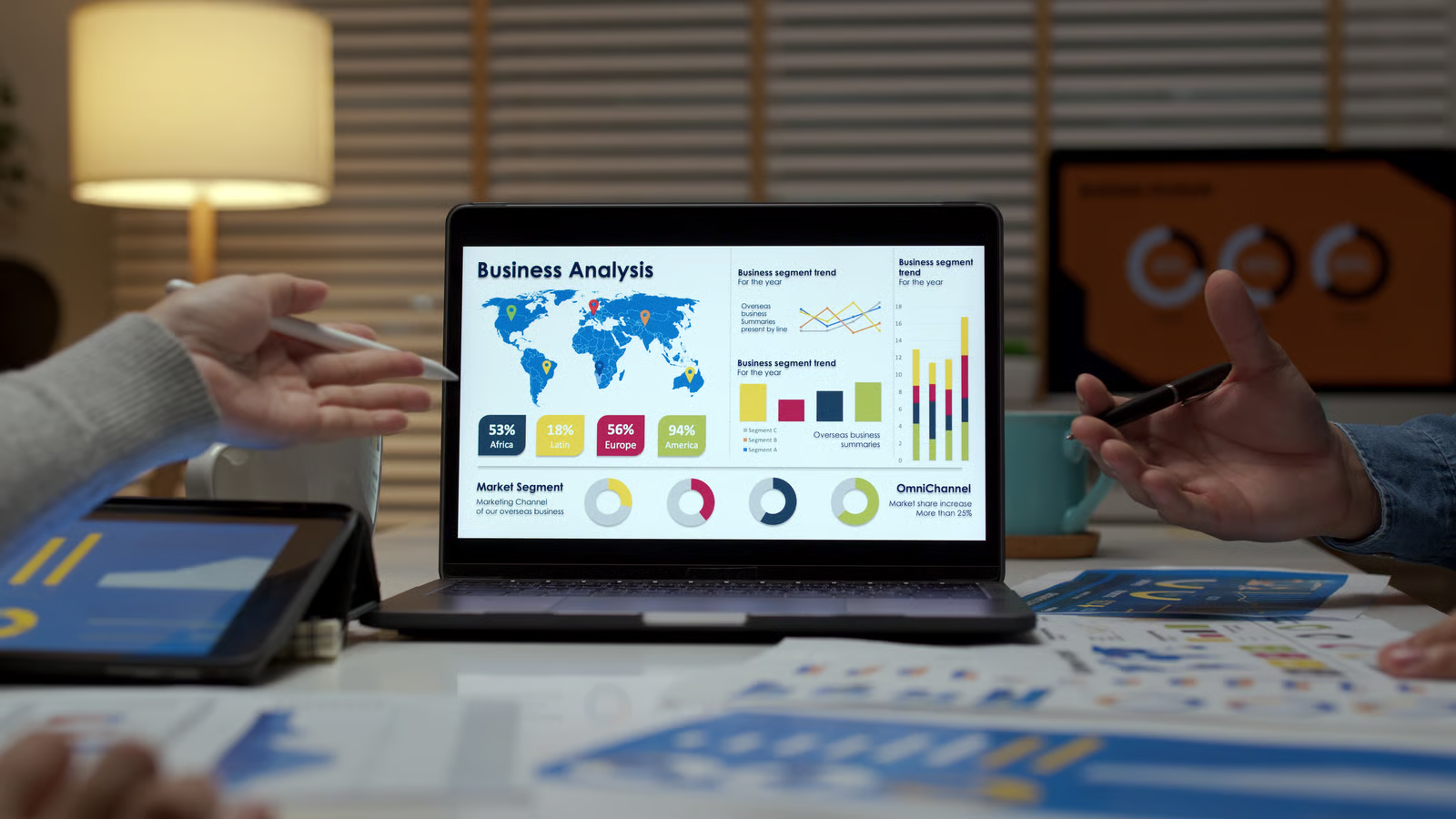
What this looks like in real programs:
- Modernization ROI dashboards: A cloud migration is tracked not only by workload count but by unit cost, performance SLAs, and consumption optimization—crucial as cloud spending rises.
- AI value scorecards: Each AI use case includes baseline measures—time per task, error rate, escalation rate—and post-release tracking to confirm realized value, addressing the common gap between AI spend and benefits.
- Executive "value narrative": A concise, repeatable story linking shipped capabilities to outcomes, enabling faster governance decisions and stronger board communication.
Next steps for leaders:
- Define "value metrics" before you define solutions. Agree on 5–10 outcomes that matter and use them to drive prioritization and scope control.
- Instrument early, not after go-live. If telemetry and data collection start late, you lose the baseline needed to prove improvement.
6) Client Success Stories: What Integrated, AI-First Delivery Achieves
The patterns below reflect OptimEdge-style engagements—where consulting and engineering operate as one team, outcomes are measurable, and delivery is paced for rapid value realization.
Case 1: Industrial Services—From Legacy Constraints to Predictable Delivery
Situation: A multi-site industrial services provider faced long release cycles and reliability issues due to tightly coupled legacy applications and manual deployment steps. Cloud adoption existed, but without standardized governance and engineering practices.
Approach: OptimEdge aligned stakeholders on a product-aligned roadmap, introduced modular service patterns, and implemented CI/CD with security controls embedded—DevSecOps. We established outcome dashboards to track flow, quality, and operational impact—responding to the visibility challenges highlighted in industry research.
Results: Faster release cadence, fewer production incidents, and clearer cost governance—supporting leadership's need to demonstrate tangible business value rather than incremental integration.
What made it work: A single accountable team reduced handoffs; product-centric prioritization kept scope tied to operational KPIs; continuous measurement created decision clarity.
Case 2: Healthcare Operations—GenAI for Service Productivity with Governance Built In
Situation: A healthcare services organization sought to reduce contact center load and speed up case resolution, but early GenAI experiments raised concerns: inconsistent knowledge sources, potential hallucinations, and compliance exposure. These scaling challenges reflect broader enterprise AI realities.
Approach: OptimEdge implemented a governed knowledge foundation, structured retrieval workflows, and role-based access controls. GenAI was deployed as a copilot inside existing case-management workflows—not as a separate tool—with human-in-the-loop review and audit-ready logging.
Results: Reduced handling time, improved answer consistency, and clearer compliance posture—aligning with executive focus on AI-driven productivity and responsible adoption.
What made it work: AI was treated as an operating capability, not a prototype. Governance and measurement were designed in from day one.
Case 3: Financial Services—Cloud Modernization That Improves Economics, Not Just Architecture
Situation: A financial services firm migrated workloads but saw cloud costs rise and delivery speed remain constrained due to inconsistent patterns and fragmented ownership. This is increasingly common as cloud becomes ubiquitous and spend grows.
Approach: OptimEdge rationalized platform services, introduced standardized deployment templates, and built a cost-and-performance optimization loop. Engineering changes were prioritized using an outcomes backlog tied to unit economics and risk reduction.
Results: Improved cost visibility, reduced waste, and faster delivery of customer-facing enhancements—supporting the enterprise mandate to prove value amid rising tech spend.
What made it work: Strategy and engineering decisions were made together, in-week, using shared metrics—not through monthly steering committee debates.
Next steps for leaders:
- Use "thin-slice" releases to prove value early. Deliver one end-to-end workflow improvement within 6–10 weeks, then expand.
- Make governance reusable. Build shared templates for access control, evaluation, and telemetry so every new AI or modernization increment is faster and safer.
7) Implementation Roadmap & Next Steps: A Practical Path to Modernization With Measurable ROI
Digital transformation succeeds when it is sequenced deliberately: stabilize the foundation, deliver value early, then scale with control. Given that fewer than 30% of transformations succeed by some estimates, leaders need a roadmap that reduces execution risk and creates confidence.
A practical OptimEdge-style roadmap:
Step 1: Align on outcomes and constraints (Weeks 1–2)
Define the 5–10 metrics that matter—cost-to-serve, cycle time, reliability, risk posture. Confirm regulatory constraints, data sensitivity, and the "non-negotiables" for security—consistent with CIO priorities emphasizing cybersecurity and data governance.
Example outputs: Value tree, KPI baseline, target-state principles.
Step 2: Establish the platform and operating baseline (Weeks 2–6)
Create reference architectures and delivery standards: CI/CD, infrastructure-as-code, identity/access patterns, observability, and data governance. This directly addresses visibility and delivery control challenges surfaced in agile value management research.
Example outputs: DevSecOps pipeline, cloud landing zone enhancements, data product standards.
Step 3: Deliver one high-impact "thin slice" (Weeks 6–12)
Pick a workflow that touches business, data, and systems—such as quote-to-cash, incident-to-resolution, or claims intake. Use cross-functional teams and ship measurable improvements quickly.
Example outputs: Working release, adoption plan, KPI movement report.
Step 4: Scale through product portfolios (Quarter 2 onward)
Expand to multiple value streams, prioritize via outcome backlogs, and use dashboards to govern investment. This aligns with research highlighting stronger performance from mature product/operating models.
Example outputs: Portfolio roadmap, quarterly value reviews, capability transfer to internal teams.
Next steps for leaders:
- Make "time-to-first-value" a contractual expectation. If a partner can't define what improves in the first 90 days, the risk is high.
- Plan for talent constraints. Hiring alone won't close gaps; build repeatable engineering patterns and shared services to multiply productivity.
Conclusion: One Partner, One Accountable Team, Outcomes You Can See
The market is investing heavily in transformation—$3.4T by 2026—but results remain uneven. AI is broadly viewed as transformative, yet many organizations still struggle to convert pilots into measurable financial outcomes. The difference is execution: integrated teams, governed foundations, and transparent measurement that ties technology delivery to business performance.
OptimEdge is built for that reality. We combine AI-first consulting and hands-on engineering, deliver through a globally scalable model with local accountability, and measure outcomes with the rigor executives expect. If you're ready to modernize platforms, scale AI responsibly, and prove ROI with clarity, OptimEdge is prepared to help you move from intent to impact.
Sources
- https://www.evanta.com/resources/cio/survey-report/top-3-priorities-for-cios-in-2025
- https://www.linkedin.com/posts/drsemihkumluk_top-cio-challenges-in-2025-from-ai-to-talent-activity-7300949382164586496-XmRG
- https://www.myhubintranet.com/digital-transformation-statistics
- https://www.gartner.com/en/articles/cio-challenges
- https://www.gartner.com/en/chief-information-officer
- https://www.eliteasia.co/worldwide-digital-transformation
- https://www.businesswire.com/news/home/20221026005193/en/IDC-Spending-Guide-Sees-Worldwide-Digital-Transformation-Investments-Reaching-%243.4-Trillion-in-2026
- https://www.hpcwire.com/bigdatawire/this-just-in/idc-worldwide-spending-on-digital-transformation-is-forecast-to-reach-almost-4t-by-2027
- https://my.idc.com/getdoc.jsp?containerId=IDC_P32575
- https://my.idc.com/getdoc.jsp?containerId=IDC_P30580
- https://mooncamp.com/blog/digital-transformation-statistics
- https://www.mckinsey.com/~/media/McKinsey/Business%20Functions/Organization/Our%20Insights/Unlocking%20success%20in%20digital%20transformations/Unlocking-success-in-digital-transformations.pdf
- https://softobiz.com/blogs/digital-transformation-roi
- https://www.mckinsey.com/capabilities/people-and-organizational-performance/our-insights/unlocking-success-in-digital-transformations
- https://www.mckinsey.com/capabilities/tech-and-ai/our-insights/leadership-and-digital-transformation
- https://www.forrester.com/press-newsroom/forrester-global-tech-spend-to-surpass-4-9-trillion-in-2025