IT Consulting vs Technical Consulting vs Managed Services: What Each Model Delivers (and Where OptimEdge Fits)
The real question: which engagement model fits your initiative?
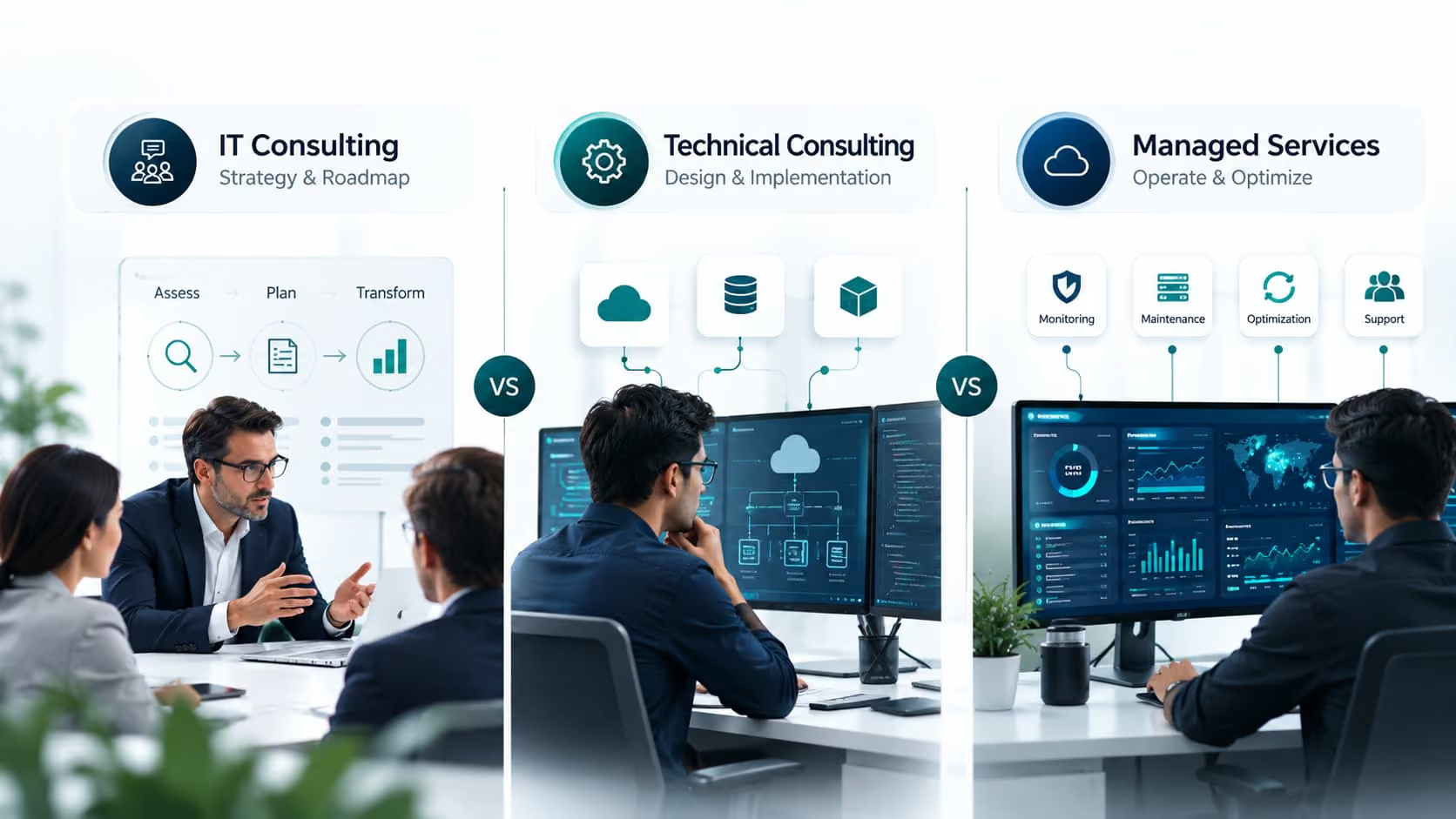
If you're funding AI, cloud, data, or cybersecurity work, the hardest part often isn't picking the technology—it's picking the engagement model. "IT consulting," "technical consulting," and "managed services" get used interchangeably, yet Gartner and IDC separate them by intent and accountability: advisory and alignment, specialized implementation, and ongoing SLA-driven operations, respectively.
Here's the practical difference: IT consulting is where you decide what to do and why; technical consulting is where experts build or integrate the solution; managed services is where a provider takes responsibility for keeping it working—proactively—over time under defined service levels. The confusion shows up when projects "go live" and then quietly become operational burdens, or when a managed provider can keep lights on but can't modernize architecture.
This guide clarifies where each model starts and stops, typical deliverables, and when each is appropriate—then explains how OptimEdge unifies all three so you can move faster with fewer vendors, fewer gaps, and clearer accountability.
What each model typically ships
IT consulting delivers business-aligned outputs: target-state architecture, migration roadmap, governance model, and investment plan. Gartner positions consulting around aligning technology strategy to business outcomes and execution planning—not day-2 operations. Use this model when you need to define "what" and "why" before committing resources.
Technical consulting services deliver specialized, hands-on work: cloud landing zones, Kubernetes platform engineering, systems integration, MLOps pipelines, identity hardening, and performance engineering. IDC differentiates this as tactical implementation driven by deep technical expertise. This is the "how"—down to deployed systems and validated performance.
Managed services is subscription-based and operational: monitoring, patching, incident response, SRE/DevOps runbooks, capacity planning, and continuous optimization—measured via SLAs (uptime, response, resolution). Choose this model when the primary outcome is stable, secure, continuously optimized operations.

Market signal: why "run" is being outsourced more often
Gartner forecasts worldwide IT spending to total $6.37T in 2026—with growing pressure to operationalize cloud and AI investments reliably. As complexity rises, leaders increasingly separate "build" from "run," or choose partners that do both. The key isn't the tooling—it's the contract structure. Consulting is governed by scope, milestones, and acceptance criteria; managed services is governed by ongoing service levels, escalation paths, and continuous improvement.
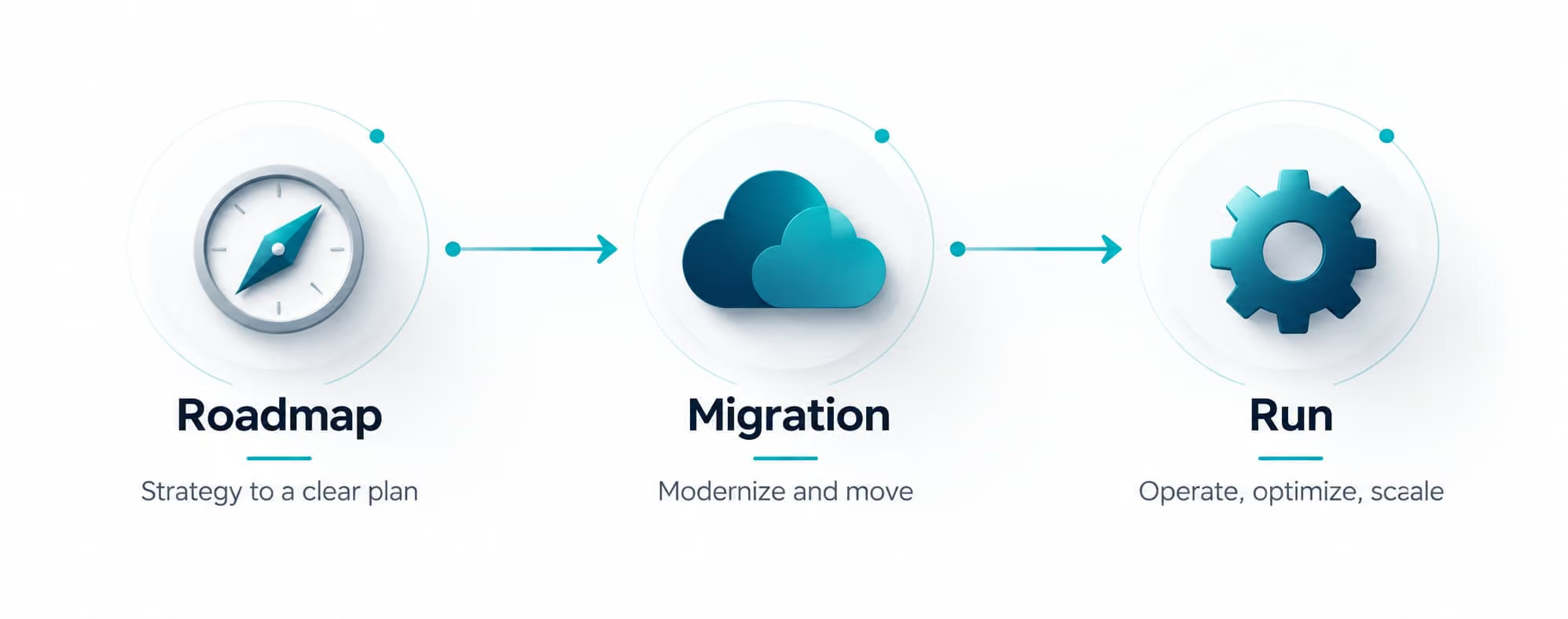
Roadmap → migration → run
Fintech modernization (end-to-end delivery):
A digital fintech preparing for international expansion started with IT consulting to define a target architecture and sequencing plan (data classification, workload placement, security guardrails). Next, a technical team executed the migration: landing zone, IaC, Kubernetes onboarding, and CI/CD controls. Finally, the platform transitioned into managed cloud operations with SLA-backed monitoring and on-call rotations. This phased approach reduced cross-vendor friction and accelerated production readiness—an increasingly common pattern as cloud estates mature.
OptimEdge outcome (build + operate with measurable reliability):
In a recent cloud operations engagement, OptimEdge combined technical implementation (instrumentation, alert tuning, runbook automation) with managed SRE coverage. Within six months, the client saw a 40% reduction in incident volume (internal OptimEdge portfolio metric) after standardizing observability, implementing error-budget practices, and tightening change management. The key wasn't a one-time fix—it was the continuity from design decisions to operational ownership, so reliability improvements compounded instead of resetting after go-live.
Next steps
If you're evaluating partners and want clarity without vendor sprawl, OptimEdge can help you map the right engagement model to your outcomes—then execute end to end.
Book a meeting to identify gaps across strategy, build, and operations
Explore solutions (AI, cloud, data, cybersecurity)
Request an assessment to standardize deliverables, SLAs, and governance across vendors
Related capabilities
- Cloud & Platform Engineering: Landing zones, Kubernetes, CI/CD, and reliability patterns—from blueprint to production operations.
- AI & Data Delivery: Use-case selection, MLOps, and secure data pipelines that survive real-world load and audits.
- Security & Resilience: Controls, monitoring, and incident readiness—paired with operational response models aligned to SLAs.
Sources

Frequently Asked Questions
IT consulting is broader and business-aligned: defining strategy, architecture, governance, and investment sequencing so technology supports business goals. Gartner and IDC frame it as advisory plus program direction, often with high-level designs and transformation roadmaps 1, 2. Technical consulting is narrower and deeper: specialized experts implement or integrate specific technologies. In short: IT consulting clarifies "what/why/when," while technical consulting delivers "how," down to deployed systems and validated performance.
Choose managed services when the primary outcome is stable, secure, continuously optimized operations—especially for hybrid/cloud operations, security monitoring, and reliability engineering. Gartner distinguishes managed services as ongoing engagements delivered under predefined SLAs, with proactive monitoring and accountability tied to response and uptime measures 1. If you're past major design decisions and need consistent coverage (24/7 on-call, patching, cost optimization, incident/problem management), managed services is usually the right fit. Use consulting when you need a discrete change delivered by a deadline.
Yes—and that combination can reduce risk if it's intentional. Many providers offer both, but the operating model must shift from project milestones to SLA-based delivery, with tooling, runbooks, and escalation paths designed for day-2 operations 1. The advantage is continuity: the team that implemented the system already understands architectural intent and failure modes, which speeds incident resolution and improves change quality. OptimEdge is built to span strategy, technical implementation, and managed operations—so you avoid handoffs between "builders" and "operators."